

📢 Disclosure: This post contains affiliate links. We may earn a commission at no extra cost to you. We only recommend products we genuinely believe in.
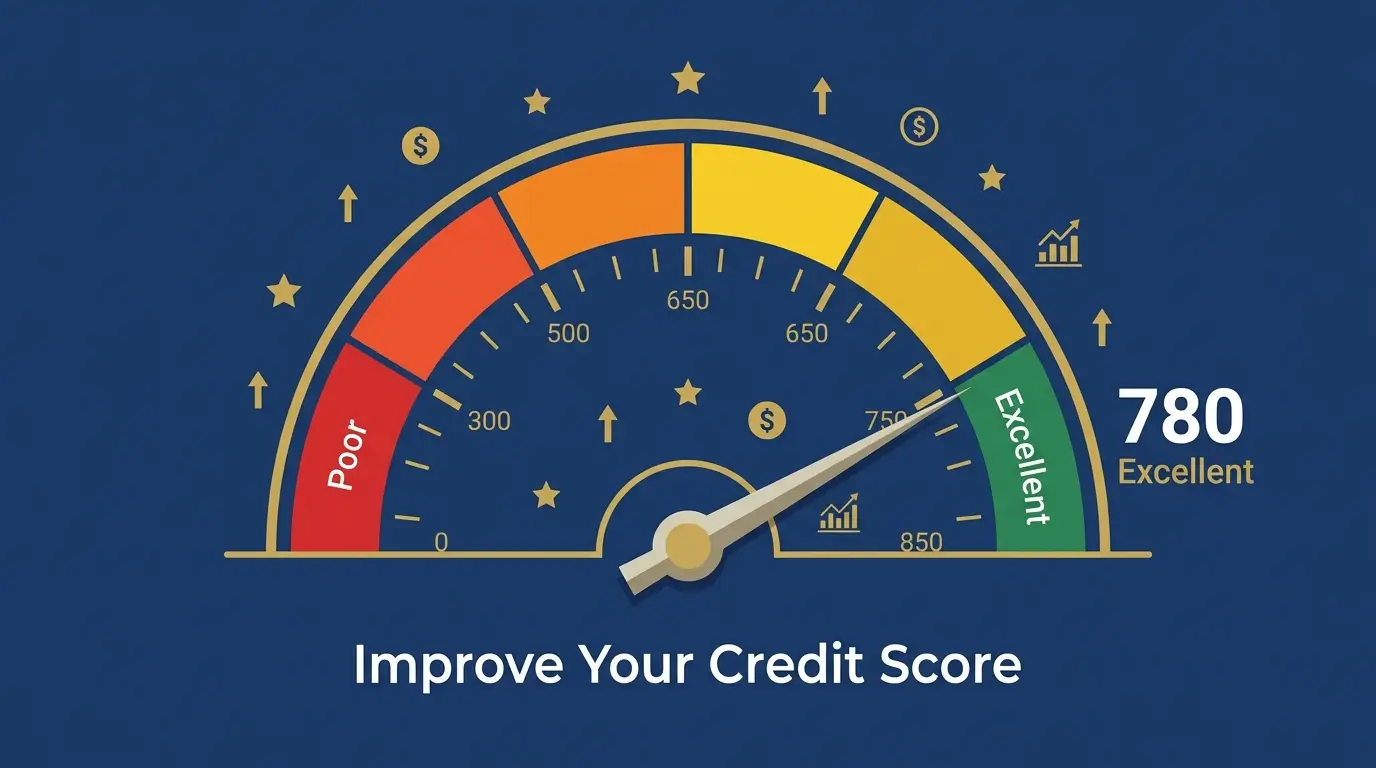
Knowing how to improve your credit score is one of the most valuable financial skills you can develop. Your credit score determines the interest rates you pay on loans, whether you get approved for an apartment, and in some cases whether you get hired. The good news: learning how to improve your credit score is not complicated — it just requires understanding exactly which actions move the needle and consistently following through. This guide gives you 10 proven steps to improve your credit score in 2026.
What Factors Determine Your Credit Score?
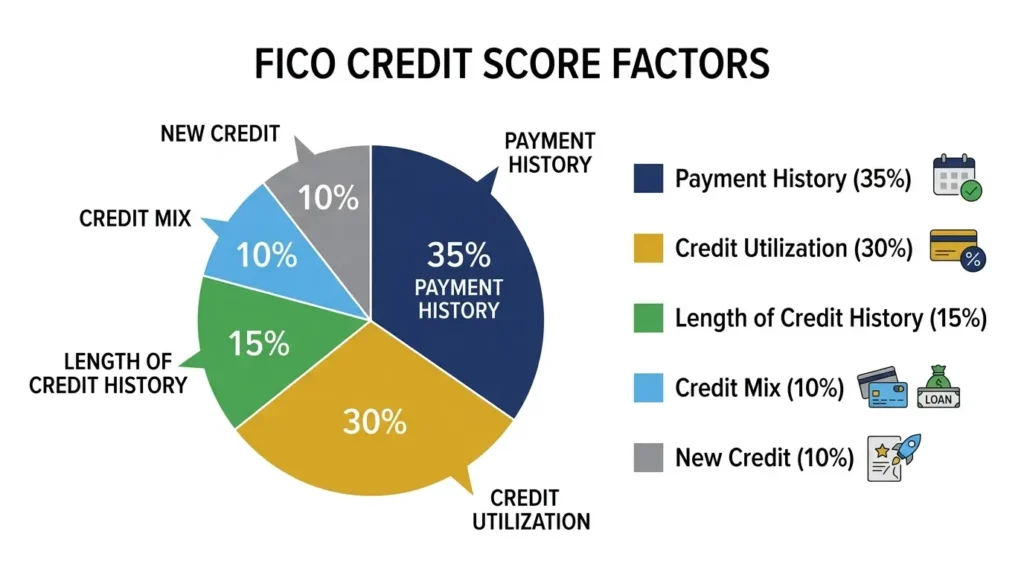
Before you can improve your credit score, you need to know what drives it. Your FICO score — the most widely used credit score model — is calculated from five factors. Understanding each factor is the foundation of how to improve your credit score effectively:
| Factor | Weight | What It Measures |
|---|---|---|
| Payment History | 35% | Whether you pay bills on time — the single most important factor |
| Credit Utilization | 30% | How much of your available credit you’re using |
| Length of Credit History | 15% | How long your accounts have been open |
| Credit Mix | 10% | Variety of account types (cards, loans, mortgage) |
| New Credit | 10% | Recent applications for new credit (hard inquiries) |
The first two factors — payment history (35%) and credit utilization (30%) — make up 65% of your score. This means the fastest way to improve your credit score is to focus on paying on time and lowering your balances. For a deeper breakdown of each factor, read our guide on what a credit score is.
Credit Score Ranges: Where Do You Stand?
| Credit Score Range | Rating | Impact |
|---|---|---|
| 800–850 | Exceptional | Best rates available on all products |
| 740–799 | Very Good | Better-than-average rates, easy approvals |
| 670–739 | Good | Most lenders approve, decent rates |
| 580–669 | Fair | Some approvals, higher interest rates |
| 300–579 | Poor | Very few approvals, highest rates or denied |
Step 1 — Pay Every Bill on Time, Every Time
The most powerful action to improve your credit score is also the simplest: pay every bill on time, every single month. Payment history accounts for 35% of your FICO score — more than any other factor. A single missed payment can drop your score by 60–110 points and stays on your credit report for 7 years.
The easiest way to guarantee on-time payments is automation. Set up autopay for at least the minimum payment on every account — credit cards, loans, utility bills. You’ll never accidentally miss a due date again.
Step 2 — Lower Your Credit Utilization Below 30%
Credit utilization — the percentage of your available credit you’re using — is the second biggest lever to improve your credit score. If you have a $5,000 total credit limit across all cards and owe $2,500, your utilization is 50%. That’s too high.
- Below 30%: Good — acceptable to most lenders
- Below 10%: Excellent — this range produces the highest score impact
- Above 30%: Hurts your score — pay down balances as a priority
To lower your utilization quickly: pay down credit card balances, make multiple payments per month (before the statement closing date), or request a credit limit increase without spending more. Never close old credit cards — this reduces your total available credit and raises utilization overnight.
Step 3 — Check Your Credit Report for Errors
Credit report errors are more common than most people realize — and they can significantly drag down your score. Errors include accounts that don’t belong to you, incorrect late payment marks, wrong balances, or duplicate entries. A single error can cost you 50–100 points.
You’re entitled to one free credit report per year from each of the three major bureaus (Equifax, Experian, and TransUnion). Review all three for errors. If you find an error:
- File a dispute directly with the credit bureau reporting the error
- Provide supporting documentation (statements, receipts)
- The bureau has 30 days to investigate and respond
- If corrected, your score can improve significantly within 30–45 days
Step 4 — Don’t Close Old Credit Cards
One of the most common mistakes people make when trying to improve their credit score is closing old credit cards they no longer use. This hurts your score in two ways:
- Reduces your available credit — instantly raises your utilization ratio
- Shortens your credit history — length of history is 15% of your score
Instead of closing old cards, keep them open and use them occasionally for a small purchase. Pay the balance in full. This keeps the account active, maintains your available credit, and preserves your credit history length.
Step 5 — Avoid Applying for New Credit Unnecessarily
Every time you apply for new credit — a credit card, auto loan, or mortgage — the lender performs a “hard inquiry” on your credit report. Each hard inquiry can drop your score by 5–10 points and stays on your report for 2 years.
When you want to improve your credit score, avoid applying for any new credit unless absolutely necessary. Multiple hard inquiries in a short period signal financial stress to lenders and compound the damage. Exception: rate shopping for a mortgage or auto loan — multiple inquiries within a 14–45 day window are treated as a single inquiry by most scoring models.
Step 6 — Become an Authorized User on a Strong Account
If you have a trusted family member or close friend with excellent credit, ask them to add you as an authorized user on one of their credit cards. Their account history — including the credit limit, age, and payment record — gets added to your credit report. This can improve your credit score significantly and relatively quickly, especially if you have a thin or damaged credit profile.
You don’t need to use the card or even receive the physical card. Simply being listed as an authorized user is enough to benefit from their positive history.
Step 7 — Diversify Your Credit Mix
Credit mix — the variety of account types in your credit profile — accounts for 10% of your FICO score. Lenders like to see that you can responsibly manage different types of credit. A strong credit mix includes:
- Revolving credit: Credit cards, lines of credit
- Installment loans: Auto loans, personal loans, student loans, mortgage
Don’t take on debt just to diversify — only add new accounts when you genuinely need them. But if you only have credit cards, a small personal loan or credit-builder loan can add a positive installment account to your profile. For context on how credit cards compare to other tools, read our guide on credit card vs debit card.
Step 8 — Pay Down High-Interest Debt Strategically
High credit card balances are the most common reason people struggle to improve their credit score. Two proven payoff strategies:
- Debt Avalanche: Pay minimums on everything, throw every extra dollar at the highest-interest debt first. Saves the most money in interest overall.
- Debt Snowball: Pay off the smallest balance first for a quick win, then roll that payment to the next smallest debt. Provides psychological momentum.
If you have multiple high-interest balances, read our guide on debt consolidation explained — combining multiple debts into one lower-rate payment can both reduce your interest costs and simplify repayment.
Step 9 — Use a Secured Card or Credit-Builder Loan
If your score is low because of a thin or damaged credit history, a secured credit card or credit-builder loan is one of the most reliable ways to improve your credit score from the ground up:
- Secured credit card: Requires a refundable deposit ($200–$500), reports to all three bureaus, builds history with every on-time payment. Read our guide on how to get your first credit card for the full process.
- Credit-builder loan: A small loan where the money is held in a savings account while you make payments. At the end, you receive the funds. This builds both savings and credit history simultaneously.
Step 10 — Be Patient and Consistent
There are no shortcuts to improve your credit score permanently. Quick fixes like paying for “credit repair” services rarely deliver what they promise — and anything they can legally do, you can do yourself for free. Real credit improvement takes time and consistency.
What you can control every month:
- Pay every bill on time
- Keep balances low relative to your limits
- Don’t open unnecessary new accounts
- Monitor your credit report for errors quarterly
How Long Does It Take to Improve Your Credit Score?
| Action Taken | Estimated Score Impact | Time to See Results |
|---|---|---|
| Pay off credit card balance | +20 to +50 points | 30–45 days (next statement) |
| Dispute and fix a credit error | +25 to +100 points | 30–60 days |
| Lower utilization below 10% | +30 to +60 points | 30–45 days |
| Become an authorized user | +20 to +50 points | 30–60 days |
| 6 months of on-time payments | +40 to +80 points | 6 months |
| 12 months of on-time payments | +60 to +120 points | 12 months |
How to Monitor Your Credit Score for Free
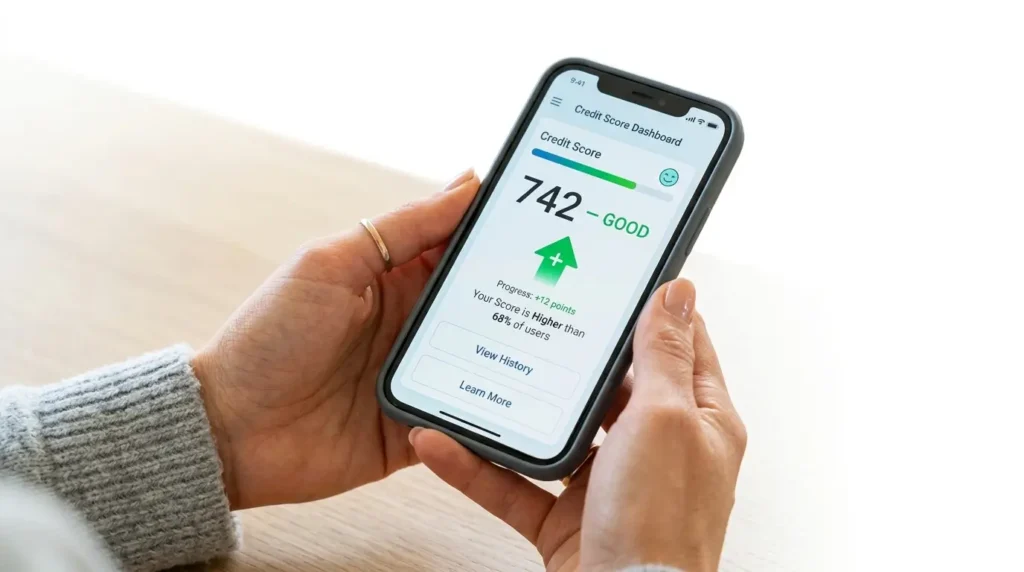
You should check your credit score at least once per month to track your progress when you’re working to improve your credit score. Several free options are available in 2026:
- Credit card issuer apps — many major credit cards (Chase, Citi, Discover, Capital One) show your FICO or VantageScore for free in their mobile app
- Credit monitoring apps — free apps show your score and alert you to changes, new accounts, or suspicious activity
- Annual credit report — you’re entitled to one free report per year from each of the three major bureaus
Monitoring your credit also helps you catch identity theft early — before it seriously damages your score. For people just starting their credit journey, read our guide on how to build credit from scratch as a complementary resource.
Frequently Asked Questions
How fast can I improve my credit score?
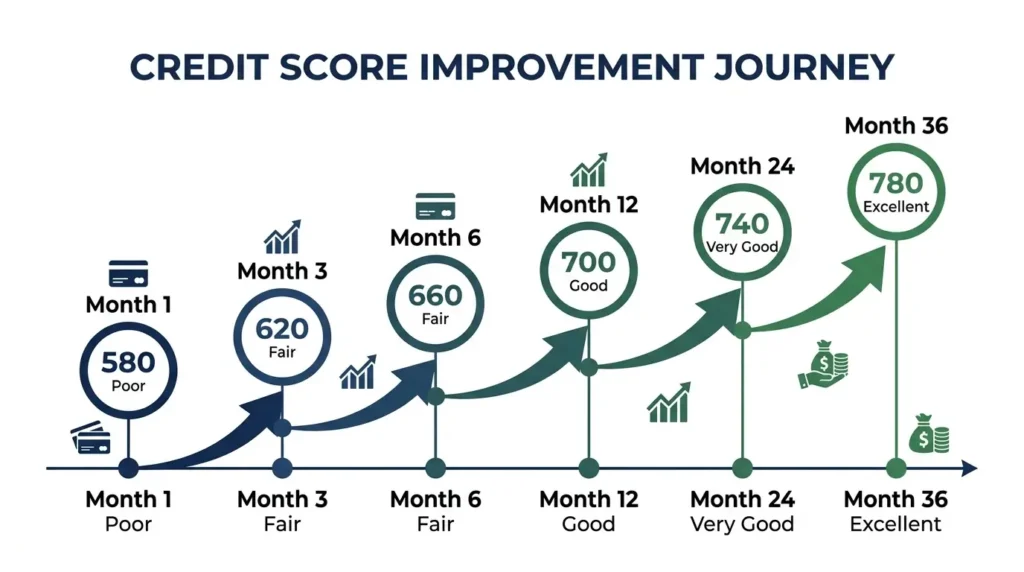
Some improvements happen quickly — paying down a credit card balance or disputing an error can raise your score within 30–45 days. Significant score improvements (60+ points) typically take 6–12 months of consistent on-time payments and low utilization. Building from poor to excellent generally takes 1–3 years.
What is the fastest way to improve your credit score?
The fastest ways to improve your credit score are: (1) pay down credit card balances to lower utilization below 10%, (2) dispute and correct any errors on your credit report, and (3) become an authorized user on a trusted person’s well-managed credit card account. These three actions can improve your score within 30–60 days.
Does checking my credit score hurt it?
No. Checking your own credit score is a “soft inquiry” and does not affect your score in any way. Only “hard inquiries” — when a lender checks your credit to make a lending decision — can temporarily lower your score. You should check your score regularly to monitor progress.
How much does paying off debt improve your credit score?
Paying off credit card debt can improve your credit score significantly — typically 20 to 50+ points — depending on how much your utilization drops. The impact is visible within 30–45 days after the payment is reported. Paying off installment loans has a smaller impact since they don’t affect utilization.
Can I improve my credit score if I have no credit history?
Yes. If you have no credit history, start by opening a secured credit card or becoming an authorized user on a family member’s account. Use the card for small purchases and pay the balance in full every month. Most people see their first credit score appear within 3–6 months and reach a Good score (670+) within 12–18 months.
Final Thoughts: Improve Your Credit Score One Step at a Time
Knowing how to improve your credit score gives you one of the most powerful financial tools available. A higher credit score means lower interest rates, better loan terms, easier apartment approvals, and more financial flexibility in every area of your life. Start with the highest-impact steps first: pay on time, lower your utilization, and dispute any errors. Then let consistency and time do the rest.
If you’re building credit for the first time, read our guide on how to build credit from scratch for the complete beginner roadmap. And once your score is in the Good range, explore our guide on how to read a credit card statement to make sure you’re managing your cards optimally every month.