

📢 Disclosure: This post contains affiliate links. We may earn a commission at no extra cost to you. We only recommend products we genuinely believe in.
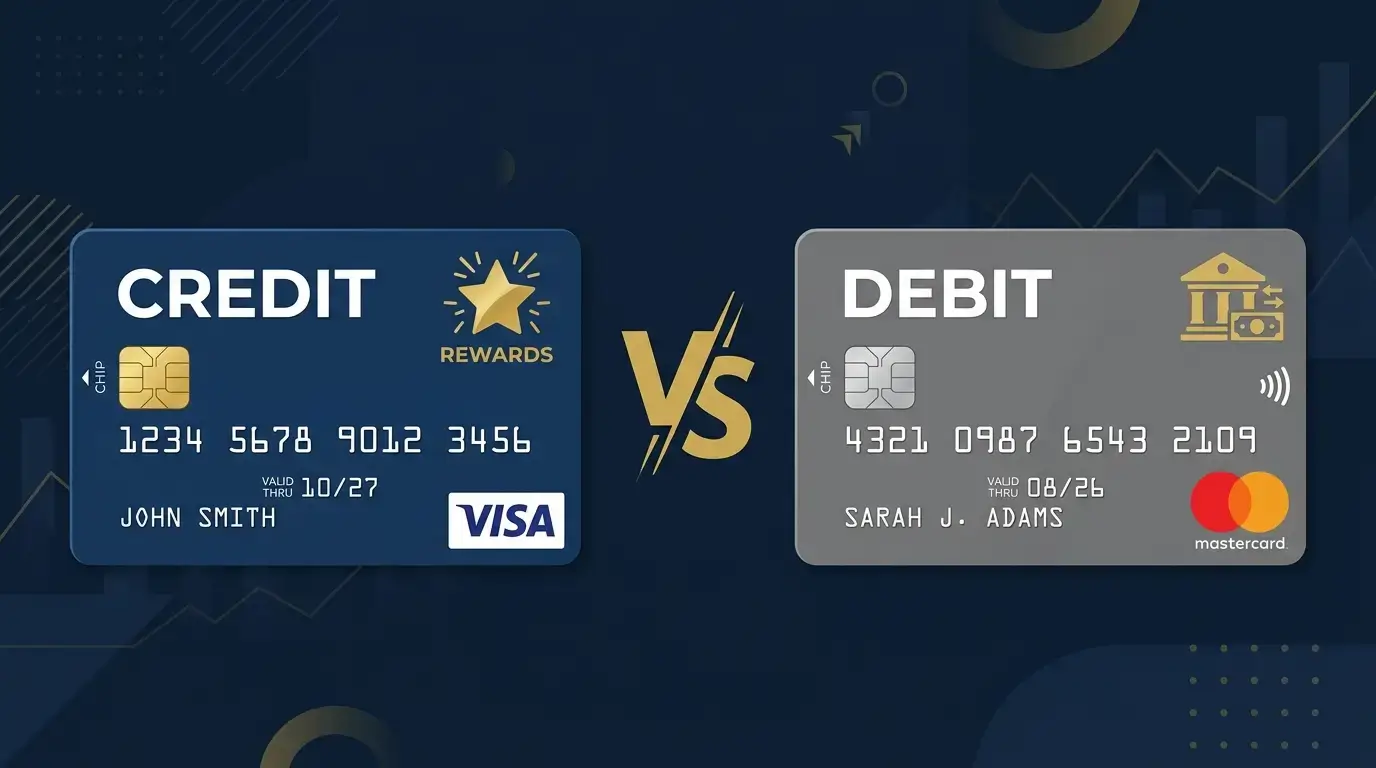
Credit card vs debit card is not a one-size-fits-all choice. A debit card spends money directly from your bank account, while a credit card lets you borrow up to a limit and repay the issuer later. The better option depends on your spending habits, ability to repay balances, need for credit building, fees, rewards and fraud protections.
In this complete guide, you’ll learn the key differences between credit and debit cards, the advantages and disadvantages of each, when to use which card, and how to use credit cards responsibly to build wealth rather than debt.
Credit Card vs Debit Card: The Core Difference
The fundamental difference comes down to one thing: whose money you’re spending.
- Debit card: You spend your own money directly from your checking account. The funds are withdrawn immediately.
- Credit card: You borrow money from the card issuer and agree to pay it back later — ideally in full each month.
Both types of cards may run on major payment networks and can look similar at checkout, but the money source, legal protections, fees, credit reporting and cardholder benefits can differ substantially.
Credit Card vs Debit Card: Full Comparison
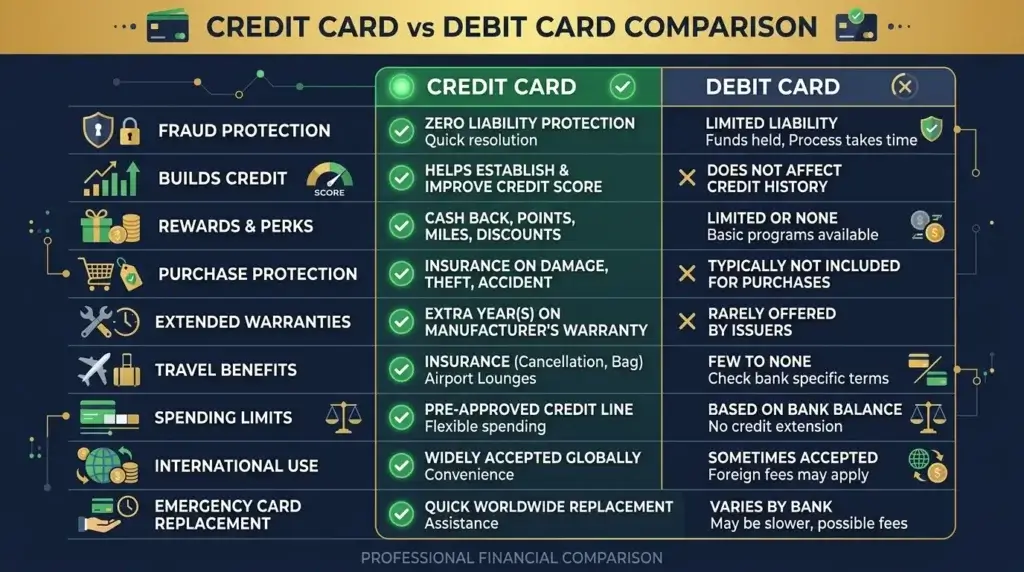
| Feature | Credit Card | Debit Card |
|---|---|---|
| Money source | Borrowed (pay back later) | Your own (withdrawn immediately) |
| Unauthorized-use protection | Federal liability is generally limited; issuer policies may provide additional protection | Federal liability depends heavily on how quickly loss or unauthorized transfers are reported |
| Builds credit score | ✅ Yes | ❌ No |
| Rewards | Available on many cards, subject to terms | Available on some debit programs, but less common |
| Overspending risk | ⚠️ Higher (borrowed money) | ✅ Lower (limited to balance) |
| Interest charges | ❌ If not paid in full | ✅ None |
| Purchase protections | May include dispute rights and issuer benefits; terms vary | Protections differ and may be more limited depending on the transaction and issuer |
| Travel benefits | Some cards include travel benefits; many do not | Less common, but issuer benefits vary |
| Rental car coverage | Available on some cards subject to exclusions and terms | May be unavailable or limited; check the card agreement |
The Case for Credit Cards
1. Superior Fraud Protection
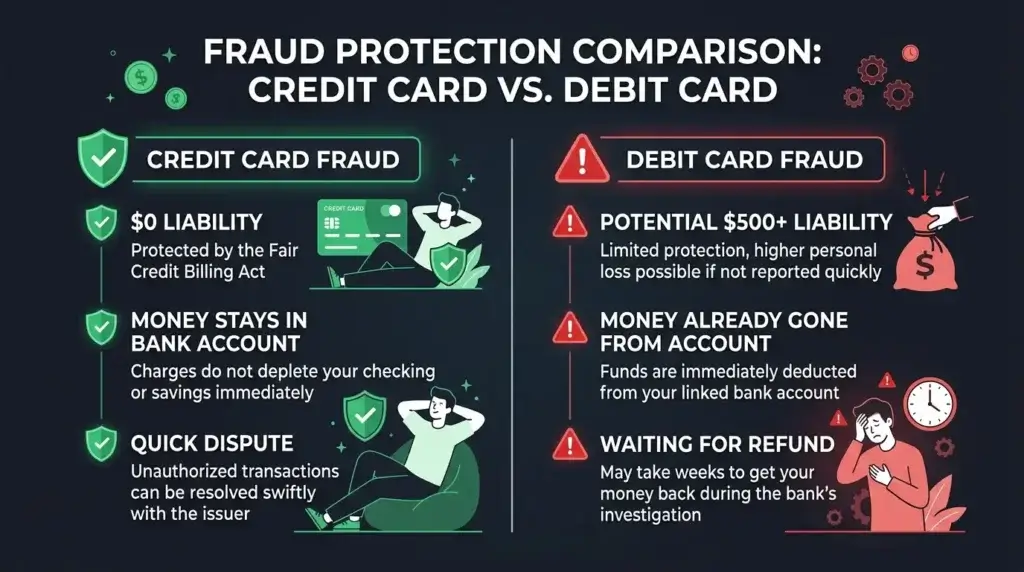
Federal law generally limits a consumer’s liability for unauthorized credit-card use to no more than $50, and if only the account number is stolen while you still have the card, you generally have no liability for unauthorized use. Many issuers also provide additional zero-liability policies, subject to their terms.
Debit-card protections are more time-sensitive. If a lost or stolen card is reported within two business days after you learn of the loss, federal liability is generally capped at $50. Reporting later can raise potential liability, and failing to report unauthorized transfers shown on a statement within 60 days can expose you to additional losses under Regulation E.
There is also a cash-flow difference: unauthorized debit transactions can reduce the balance in your bank account while the dispute is investigated. Credit-card disputes generally involve borrowed funds rather than money already removed from your deposit account.
2. Builds Your Credit Score
Credit-card accounts can contribute to your credit history when the issuer reports them to credit bureaus. Payment history, balances, account age and other factors influence credit scores, so simply using a card does not guarantee that your score will rise. Learn more in our guide on what a credit score is.
Ordinary debit-card purchases are generally not reported as revolving credit activity and therefore do not build a traditional credit-card payment history. If you want to build credit, compare products designed for that purpose rather than assuming a debit card can do it.
3. Earn Rewards on Every Purchase
Many credit cards offer cash back, points or travel rewards, but earning rates, caps, exclusions and annual fees vary. Rewards only add value if they outweigh the card’s costs and do not encourage extra spending or interest-bearing balances.
Rewards structures vary by issuer and can change over time. Common categories may include groceries, dining, gas, travel or a flat rate on eligible purchases.
- Groceries: category rewards may be available on some cards
- Dining: some cards offer category rewards
- Gas: rewards vary by issuer and card
- Other purchases: some cards offer a flat rewards rate
4. Purchase Protection and Extended Warranties
Some credit cards include benefits such as purchase protection or extended warranty coverage, but these are issuer-specific benefits with exclusions, claim limits and eligibility rules. Debit-card benefits also vary by issuer, so review the card agreement rather than assuming either product always includes or excludes a benefit.
5. Travel Benefits
Some travel-oriented credit cards offer benefits such as rental-car coverage, trip protections, lounge access or no foreign transaction fee. These features are not universal and may come with annual fees, exclusions or enrollment requirements.
The Case for Debit Cards
1. No Risk of Debt or Interest Charges
The biggest advantage of debit cards is also the most obvious: you can only spend money you actually have. There is no risk of accumulating high-interest credit card debt because you’re spending from your own account. For people who struggle with overspending, this built-in limit is genuinely valuable.
2. No Application Required
Debit cards come automatically with most checking accounts. There’s no credit check, no application process, and no risk of rejection. If you have bad credit or are just starting to build credit history, a debit card is immediately accessible.
3. Easier Budget Tracking
Because debit card transactions immediately reduce your checking account balance, it’s easier to see in real time exactly how much money you have left to spend. Some people find this more psychologically effective for sticking to a budget than credit cards, where the bill comes later.
When to Use a Credit Card
Use your credit card for these situations — and pay the balance in full each month:
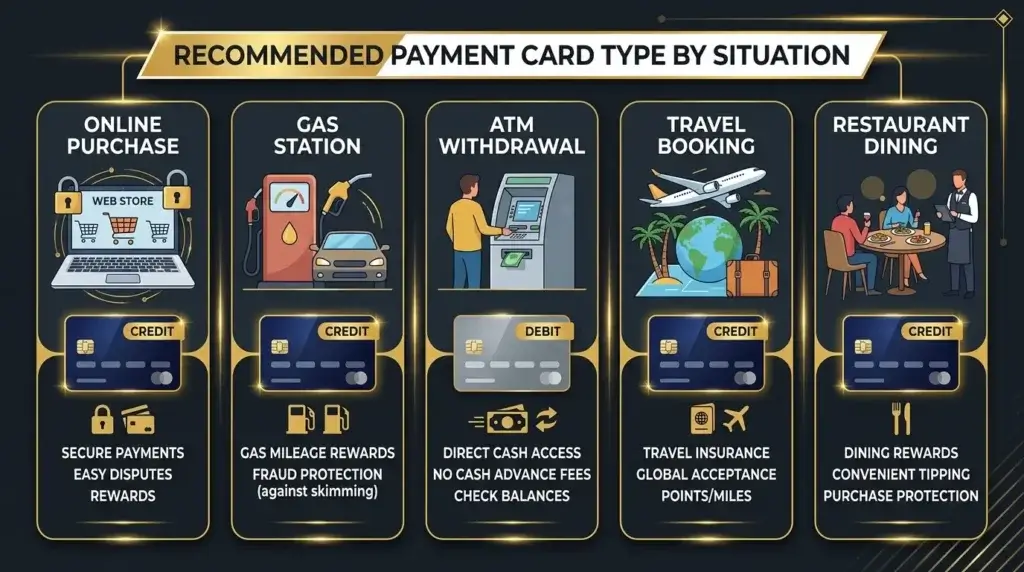
- ✅ Online purchases — Superior fraud protection if the merchant is compromised
- ✅ Travel bookings — Hotels, flights, rental cars (better protections and benefits)
- ✅ Large purchases — Extended warranty and purchase protection apply
- ✅ Gas stations — Debit card skimmers are more risky; credit is safer
- ✅ Recurring bills — Utilities, subscriptions (earn rewards passively)
- ✅ Restaurants and dining — High rewards categories, better fraud protection
When to Use a Debit Card
- ✅ ATM withdrawals — Avoid cash advance fees on credit cards
- ✅ When merchants charge credit card surcharges — Some small businesses add a fee for credit payments
- ✅ If you’re prone to overspending — The hard limit of your account balance provides automatic discipline
- ✅ Peer-to-peer payments — Venmo, Zelle, and Cash App are typically linked to debit/bank accounts
How to Use Credit Cards Responsibly
The credit card advantages above only apply if you use the card responsibly. Here are the non-negotiable rules:
Rule 1: Pay the Full Balance Every Month
Paying the statement balance in full by the due date can generally help you avoid purchase interest when the card has a grace period and you remain eligible for it. If you carry a balance, the applicable APR can make rewards much less valuable, so review the card’s interest and fee terms.
Rule 2: Keep Revolving Balances Manageable
Credit utilization can affect credit scores, but there is no universal 30% cutoff that guarantees a particular score. In general, lower reported revolving balances relative to available credit can be better than high utilization. Read our guide on what a credit score is for the broader factors involved.
Rule 3: Never Miss a Payment
Set up reminders or autopay so you do not miss the due date. Late payments can hurt credit, but the exact score impact varies by scoring model and credit file. If cash flow allows, paying the statement balance in full can also help avoid interest on purchases when a grace period applies.
Rule 4: Treat It Like a Debit Card
Only charge what you can afford to pay off this month. Never think of your credit limit as additional spending money — think of it as a convenience tool that earns you rewards on spending you were already going to do.
Which Card Should You Use? The Verdict
There is no universally superior choice. A credit card may be useful for people who can repay it on time and value credit-building or issuer benefits, while a debit card can be a better fit for people who want to spend only from available cash or avoid revolving debt. The right choice depends on the transaction and your habits.
| Your Situation | Recommended Card |
|---|---|
| You pay your balance in full every month | ✅ Credit card for most purchases |
| You sometimes carry a balance | ⚠️ Debit card until you build that habit |
| You’re building credit from scratch | ✅ Secured credit card (reports to bureaus) |
| You’ve struggled with credit card debt | ✅ Debit card until financially stable |
| You’re traveling internationally | ✅ No-foreign-fee credit card |
| ATM cash withdrawal | ✅ Debit card always |
Frequently Asked Questions
Is it better to use a credit card or debit card for everyday purchases?
It depends on your habits and the transaction. A credit card can offer credit-building, dispute rights and rewards if you manage it carefully and avoid interest. A debit card may be a better fit if you want purchases to come directly from available cash and avoid revolving debt.
Can someone steal money from my debit card?
Unauthorized debit-card transactions can remove money from your bank account, so reporting them quickly is important. Federal liability protections depend on how soon you notify the bank, while unauthorized credit-card use is governed by different rules and generally does not directly reduce your checking balance.
Does using a debit card hurt your credit score?
No — but it doesn’t help it either. Debit card transactions are not reported to the credit bureaus. Using only a debit card means you’re missing an easy opportunity to build your credit history.
What’s the best credit card for beginners?
For beginners with limited credit history, consider a secured credit card or a student credit card. The Discover it Secured Card and Capital One Platinum Secured Card are popular options. As your credit profile improves, you may qualify for a wider range of cards, but there is no single score that guarantees approval for a rewards card. Read our guide on how to get your first credit card with no credit history for a full walkthrough.
Should I use a credit card for gas?
Either card can be exposed to skimming or stolen card data at a gas pump. A credit card may reduce the immediate cash-flow impact because unauthorized charges do not directly withdraw money from your checking account, but you should monitor either account and report suspicious transactions quickly.
The Bottom Line
Credit and debit cards solve different problems. Credit cards can offer borrowing-related protections, credit-history reporting and rewards, while debit cards provide direct access to money you already have and can reduce the temptation to borrow. Choose based on the purchase, your repayment habits, fees and the protections in your specific card agreement.
If you’re ready to start using credit cards strategically, read our guide on how to build credit from scratch to understand the full picture. And if you’re looking for the right card to start with, check our list of the best secured credit cards for beginners.
Disclaimer: This article is for informational purposes only and does not constitute financial advice. Credit card terms and rewards programs change frequently. Always verify current offers directly with card issuers before applying.