

📢 Disclosure: This post contains affiliate links. We may earn a commission at no extra cost to you. We only recommend products we genuinely believe in.
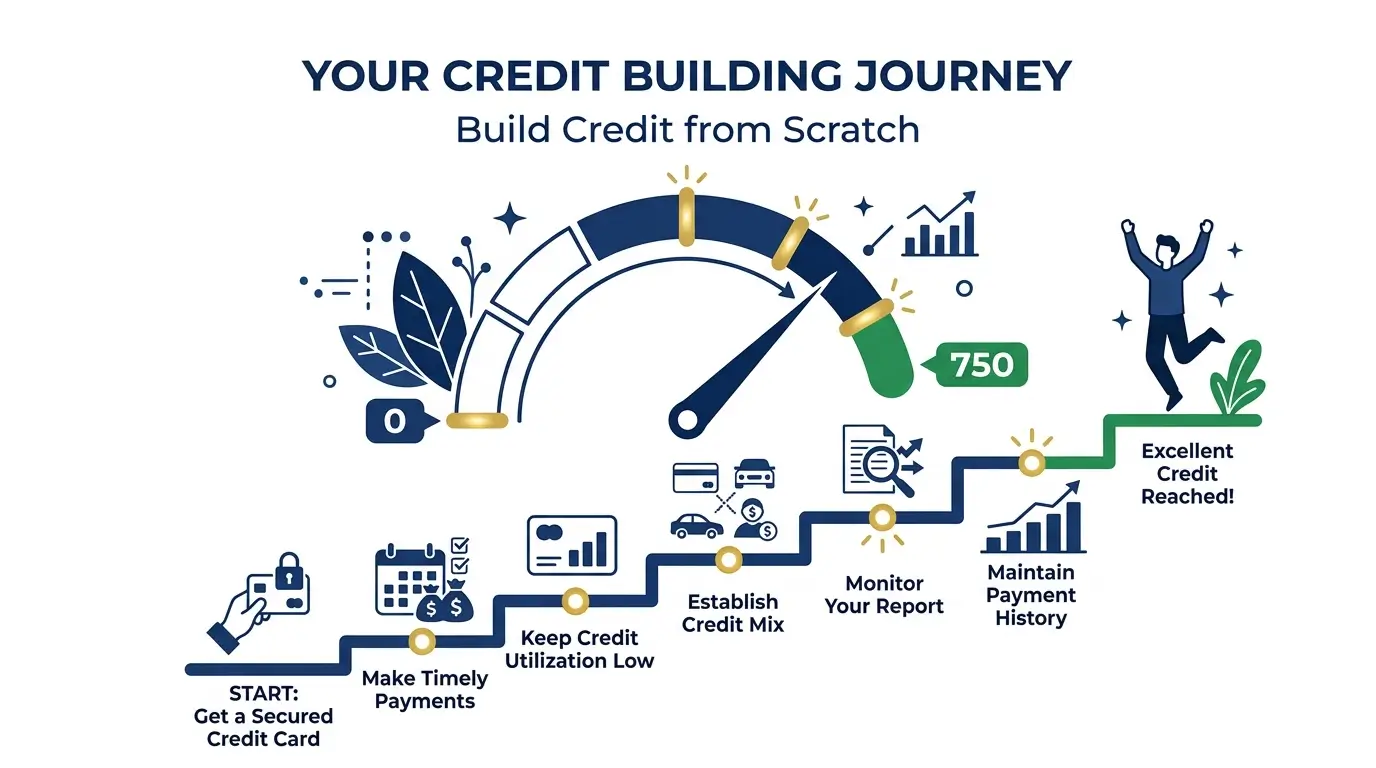
Building credit from scratch is one of the most important financial steps you can take — yet millions of Americans have no credit history at all. Whether you’re 18 years old just starting out, a recent immigrant with no US credit history, or someone who has never had a credit card, this guide will walk you through exactly how to build credit from zero in the most effective way possible.
Before diving in, it helps to understand what you’re building toward. Read our complete guide on what is a credit score to understand the five factors that determine your score and why building credit matters so much for your financial future.
Why You Need to Build Credit from Scratch
Having no credit history is sometimes called being “credit invisible” — and it creates real financial obstacles. Without a credit history, you may face:
- Difficulty getting approved for an apartment (most landlords check credit)
- Higher security deposits on utilities and rentals
- No access to credit cards with rewards or low interest rates
- Higher interest rates on any loans you do qualify for
- Difficulty financing a car or getting a mortgage
- Some employers checking credit as part of background screening
The good news: building credit from scratch is straightforward when you know the right steps. And the sooner you start, the faster you’ll have access to the financial opportunities that good credit unlocks.
How Long Does It Take to Build Credit from Scratch?
You need at least one account open for 6 months before the FICO scoring model generates your first credit score. Here is a realistic timeline:
| Timeframe | Milestone | Expected Score Range |
|---|---|---|
| 0–5 months | No score yet — building history | N/A |
| 6 months | First FICO score generated | 580–650 |
| 6–12 months | Consistent on-time payments | 640–680 |
| 1–2 years | Strong payment history established | 680–720 |
| 2–4 years | Good credit profile with mix | 720–760 |
| 4+ years | Excellent credit potential | 760–800+ |
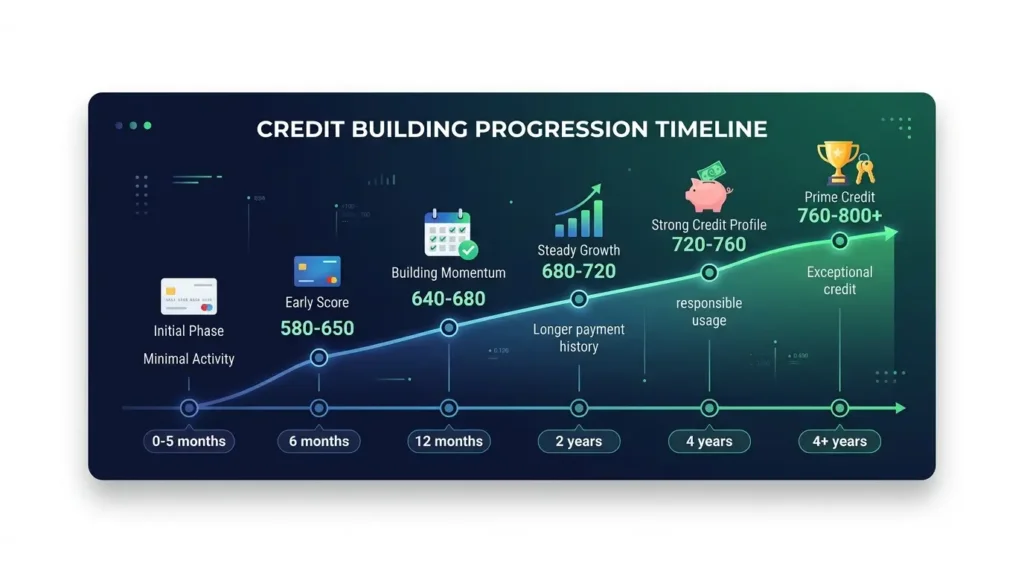
These are estimates — your actual score depends on how responsibly you use credit, your utilization rate, and whether you avoid any negative marks like late payments.
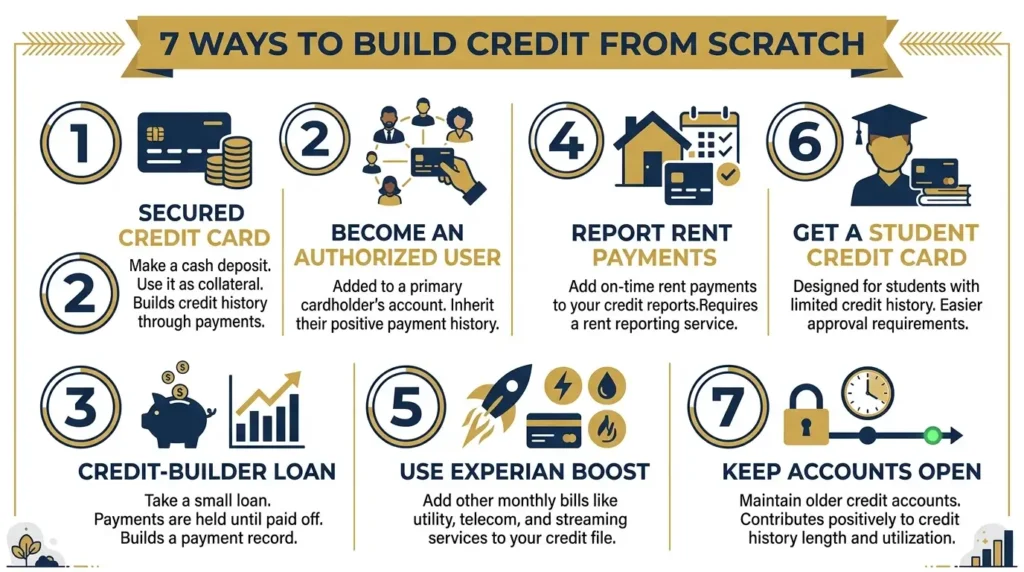
7 Proven Ways to Build Credit from Scratch
1. Get a Secured Credit Card (Best First Step)
A secured credit card is the most accessible and effective tool for building credit from scratch. Here is how it works:
- You make a refundable security deposit (usually $200 to $500) that becomes your credit limit
- You use the card for small purchases (gas, groceries) and pay the full balance each month
- The card issuer reports your payment activity to the three credit bureaus
- After 6 to 12 months of responsible use, many issuers upgrade you to an unsecured card and return your deposit
Best secured cards for beginners in 2026:
- Discover it Secured — Earns 2% cash back on gas and restaurants, 1% everywhere else. No annual fee. Automatically reviews for upgrade after 7 months.
- Capital One Platinum Secured — Low minimum deposit ($49, $99, or $200 depending on creditworthiness). No annual fee.
- Chime Credit Builder — No credit check required, no minimum deposit, no interest charges. Ideal for those with no credit history at all.
The key rule with any secured card: pay the full balance every month. Never carry a balance — the interest charges will cost you far more than any rewards you earn.
2. Become an Authorized User
Ask a family member or trusted friend with good credit to add you as an authorized user on their credit card account. As an authorized user, their account history gets added to your credit report — including their payment history and account age. You don’t even need to use the card (or be given the physical card).
What to look for in the primary account holder:
- Perfect on-time payment history (no late payments)
- Low credit utilization (below 30%)
- Account age of at least 2+ years
This is one of the fastest ways to jumpstart your credit score because you immediately inherit the account’s positive history. Even a few months as an authorized user on a well-managed account can give you a meaningful starting score.
3. Apply for a Credit-Builder Loan
A credit-builder loan is specifically designed to help people build credit. Unlike a traditional loan, you don’t receive money upfront. Instead:
- You apply for a small loan (typically $300 to $1,000) at a credit union or online lender
- The loan funds are deposited into a savings account held by the lender
- You make monthly payments (usually $25 to $50) for 6 to 24 months
- Each payment is reported to the credit bureaus, building your payment history
- At the end, you receive the full loan amount plus interest earned
Credit-builder loans are available at many credit unions, community banks, and online through services like Self (formerly Self Lender). They’re especially useful because they add an installment loan to your credit mix, which complements a revolving credit card account.
4. Report Your Rent Payments
Rent payments are typically not reported to the credit bureaus — but they can be with the right service. If you consistently pay rent on time, you’re demonstrating excellent payment reliability that your credit score doesn’t currently reflect.
Services that report rent to credit bureaus:
- Experian Boost — Free, reports rent (and utilities, Netflix) to Experian instantly
- RentReporters — Reports to TransUnion and Equifax, can report up to 24 months of history ($94.95 one-time fee)
- Rental Kharma — Reports to TransUnion, also allows reporting of past rent history
5. Use Experian Boost
Experian Boost is a free tool that scans your bank account for on-time utility, phone, and streaming service payments (Netflix, Disney+, HBO Max) and adds them to your Experian credit report. It can instantly raise your Experian credit score — on average by 13 points according to Experian’s own data.
While it only affects your Experian score (not Equifax or TransUnion), it’s free and takes about 5 minutes to set up. It’s a no-brainer addition to any credit-building strategy.
6. Get a Student Credit Card (If You’re a Student)
If you’re a college student, student credit cards are specifically designed for people with limited or no credit history. They typically have lower credit limits and no rewards compared to regular cards, but they’re much easier to qualify for and function identically for credit-building purposes.
Top student cards in 2026 include the Discover it Student Cash Back and the Capital One SavorOne Student card. Both report to all three credit bureaus and offer path-to-upgrade programs after responsible use. Read our guide on how to get your first credit card with no credit history for a full comparison.
7. Keep Accounts Open and Active
Once you’ve opened accounts, keep them open — even if you don’t use them much. Closing accounts reduces your available credit (increasing utilization) and shortens your average account age (reducing the length of credit history factor). Both hurt your score.
Put a small recurring charge on any card you’re not actively using (like a streaming subscription) and set up autopay to ensure on-time payment. This keeps the account active and building positive history without any extra effort.
The 5 Habits That Build Credit Fastest
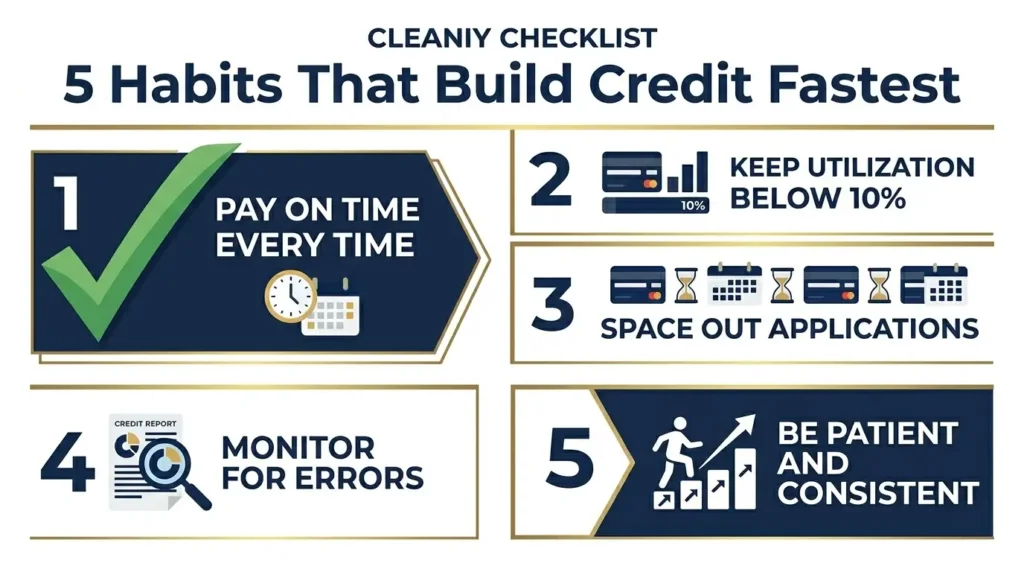
Once you have your first account, these five habits will build your score as quickly as possible:
- Pay every bill on time, every time — Payment history is 35% of your score. Set up autopay immediately.
- Keep credit utilization below 10% — If your limit is $500, never let your balance exceed $50 before the statement closes. Pay early if needed.
- Don’t apply for multiple cards at once — Each application triggers a hard inquiry. Space applications at least 6 months apart.
- Monitor your credit report for errors — Check your free report annually at AnnualCreditReport.com. Dispute any inaccuracies immediately.
- Be patient and consistent — Credit is built over time. The factors most rewarded by FICO (payment history, account age) only improve with consistent, patient behavior.
What to Avoid When Building Credit from Scratch
- ❌ Missing payments — Even one 30-day late payment can drop your new score by 50+ points
- ❌ Maxing out your card — High utilization is the second-fastest way to damage your score
- ❌ Applying for too many cards at once — Multiple hard inquiries signal financial desperation to lenders
- ❌ Closing your first card — Your oldest account is the most valuable for credit age — never close it
- ❌ Co-signing for someone else’s debt — If they miss payments, it directly damages your credit
- ❌ Credit repair scams — No company can legally remove accurate negative information from your credit report. Avoid any “credit repair” service that promises miraculous results for a fee.
Frequently Asked Questions About Building Credit
Can I build credit with no income?
You can become an authorized user on someone else’s account with no income. To open your own credit card, most issuers require some form of income — but for students, this can include allowances, part-time work, or scholarships. Credit-builder loans from credit unions may also be available with minimal income requirements.
How do I check my credit score for free?
Use Credit Karma (free, updates weekly), Experian’s free account (gives your actual FICO Score 8), or check through your bank’s app if it offers free credit score access. Never pay for your credit score — there are too many free options available.
Does checking my own credit score hurt it?
No. Checking your own score (a “soft inquiry”) has zero impact on your credit score. Only hard inquiries — when a lender checks your score as part of a credit application — can temporarily lower your score.
How long does negative information stay on my credit report?
Most negative information stays on your credit report for 7 years. Bankruptcies can remain for up to 10 years. However, the impact of negative items diminishes significantly over time — a late payment from 3 years ago matters much less than one from 6 months ago.
What credit score do I need for my first apartment?
Most landlords prefer a score of at least 620 to 650. In competitive rental markets, 700+ is often expected. If your score is below this threshold, you may be able to compensate with a larger security deposit, a co-signer, or proof of strong income (typically 3x the monthly rent).
The Bottom Line
Building credit from scratch takes time, but the path is clear: get a secured credit card or become an authorized user, pay every bill on time, keep your utilization low, and be patient. Within 6 months you’ll have your first score. Within 2 years, you can have good credit. Within 4 to 5 years, excellent credit is within reach.
The most important step is simply to start today. Every month you delay is a month of positive payment history you’ll never get back. Open your first secured card, set up autopay, and let time do the rest.
Once you have a score above 670, read our guide on how to improve your credit score fast to push it even higher. And when you’re ready for your first rewards card, check our list of the best secured credit cards for beginners to find the right option for your situation.
Disclaimer: This article is for informational purposes only and does not constitute financial advice. Credit card approval, terms, and interest rates vary by issuer and individual creditworthiness. Always read the full terms before applying for any credit product.