

📢 Disclosure: This post contains affiliate links. We may earn a commission at no extra cost to you. We only recommend products we genuinely believe in.
Learning how to get your first credit card is one of the most important financial steps you can take as a beginner. Your first credit card is not just a payment tool — it’s the foundation of your entire credit history. Use it wisely and you’ll build a strong credit score that unlocks lower interest rates, better loan terms, and more financial opportunities for years to come. This guide walks you through exactly how to get your first credit card, which type to choose, and how to use it responsibly from day one.
Why Getting Your First Credit Card Matters
Your credit score affects far more than just loan approvals. Landlords check it before renting to you. Insurance companies use it to set premiums. Some employers review it as part of background checks. Without a credit history, you’re financially invisible — and that invisibility costs you money.
Getting your first credit card and using it responsibly is the fastest and most accessible way to start building credit. To understand exactly what you’re building toward, read our guide on what a credit score is and the five factors that determine it.
Are You Ready for Your First Credit Card?
Before applying, make sure these basics are in place. A credit card is a financial tool — used well it builds wealth, used poorly it creates debt.
- You have a steady income — even part-time work or a student stipend qualifies
- You understand how interest works — carrying a balance means paying interest, often 20–30% APR
- You can pay the full balance monthly — this is the golden rule of credit card use
- You have a checking or savings account — you’ll need one to link for payments
- You won’t use it to spend money you don’t have — a credit card is not extra income
Best Types of First Credit Cards for Beginners
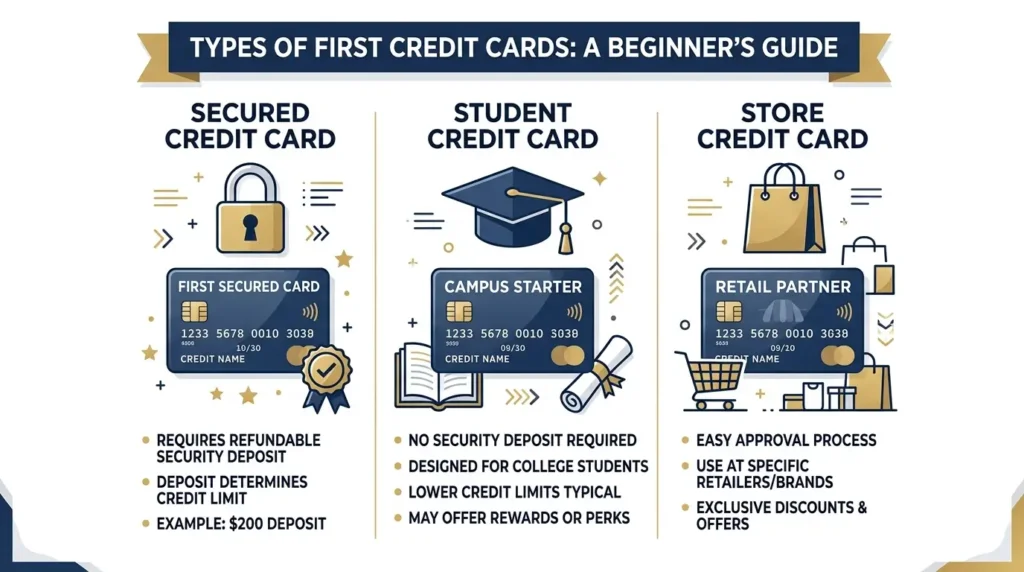
When figuring out how to get your first credit card, choosing the right type is the most important decision. Here are the three best options for people with no credit history or limited credit:
1. Secured Credit Card — Best for No Credit History
A secured credit card requires a refundable security deposit — typically $200 to $500 — which becomes your credit limit. This deposit protects the bank if you don’t pay. Secured cards are the easiest to get approved for and work identically to regular credit cards for building credit.
- Approval odds: Very high — even with zero credit history
- Deposit required: $200–$500 (refunded when you upgrade or close)
- Credit limit: Equal to your deposit
- Best for: Complete beginners, people rebuilding credit
- Graduation: Most upgrade to an unsecured card after 6–12 months of on-time payments
2. Student Credit Card — Best for College Students
Student credit cards are designed specifically for college students with limited or no credit history. They typically have lower credit limits, no annual fee, and sometimes offer small rewards on everyday purchases like dining or streaming services.
- Approval odds: High for enrolled students
- Deposit required: None
- Annual fee: Usually none
- Best for: Full-time or part-time college students
- Perks: Some offer cash back, good grade rewards, or no foreign transaction fees
3. Beginner Unsecured Card — Best for Those with Some Income
Some issuers offer unsecured credit cards specifically designed for first-time applicants with limited credit history. These require no deposit but may come with a low initial credit limit ($300–$500) and a small annual fee. They’re a good option if you have steady income but no credit history.
- Approval odds: Moderate — depends on income
- Deposit required: None
- Annual fee: $0–$39
- Best for: Non-students with income but no credit history
First Credit Card Comparison: Secured vs Student vs Unsecured
| Feature | Secured Card | Student Card | Beginner Unsecured |
|---|---|---|---|
| Deposit required | Yes ($200–$500) | No | No |
| Approval difficulty | Very easy | Easy (students) | Moderate |
| Annual fee | $0–$35 | Usually $0 | $0–$39 |
| Credit limit | = Your deposit | $500–$1,500 | $300–$500 |
| Builds credit? | Yes ✅ | Yes ✅ | Yes ✅ |
| Best for | Zero credit history | College students | Non-students with income |
How to Apply for Your First Credit Card
Knowing how to get your first credit card approved starts with a clean, complete application. Here’s the step-by-step process:
- Check your credit report first — even with no credit history, verify there are no errors or fraudulent accounts. You can get a free report annually.
- Choose the right card type — use the comparison above to pick the best fit for your situation
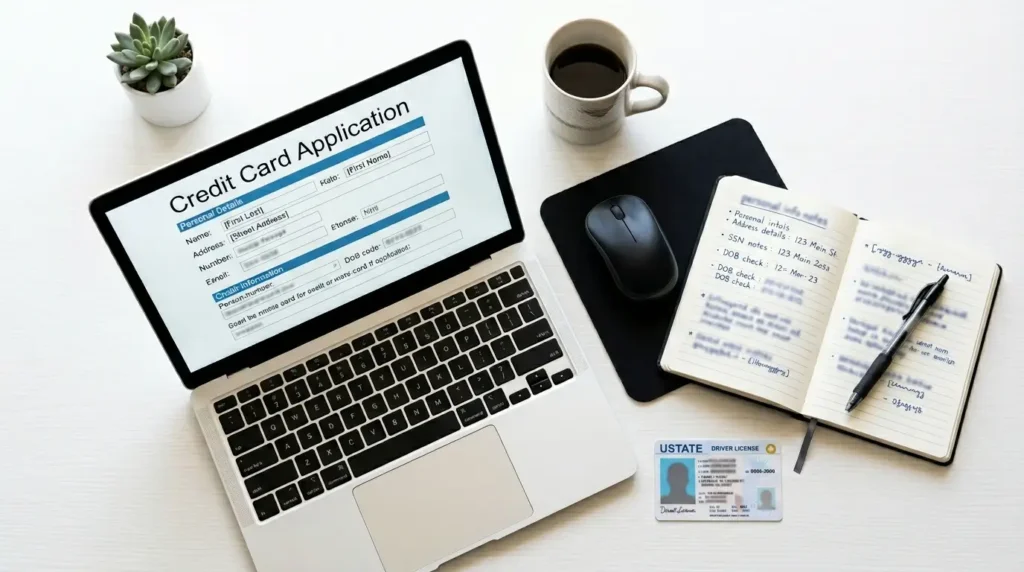
- Gather your information — you’ll need your full name, address, Social Security number, date of birth, and income information
- Apply online — most applications take 5–10 minutes and give an instant decision
- Start with one card only — applying for multiple cards at once hurts your score with multiple hard inquiries
- Use it immediately for a small purchase — activating and using the card starts your credit history clock
If you’re starting from zero credit, read our full guide on how to build credit from scratch — it covers all 7 methods for establishing credit for the first time.
What to Do If You Get Denied
Getting denied for your first credit card is common and not the end of the road. Here’s what to do:
- Read the adverse action notice — the issuer must tell you why you were denied. Common reasons: insufficient credit history, income too low, too many recent applications.
- Apply for a secured card instead — secured cards are approved even with zero credit history
- Become an authorized user — ask a trusted family member to add you to their credit card account. Their payment history appears on your report.
- Wait 3–6 months before applying again to avoid stacking hard inquiries on your report
How to Use Your First Credit Card Responsibly
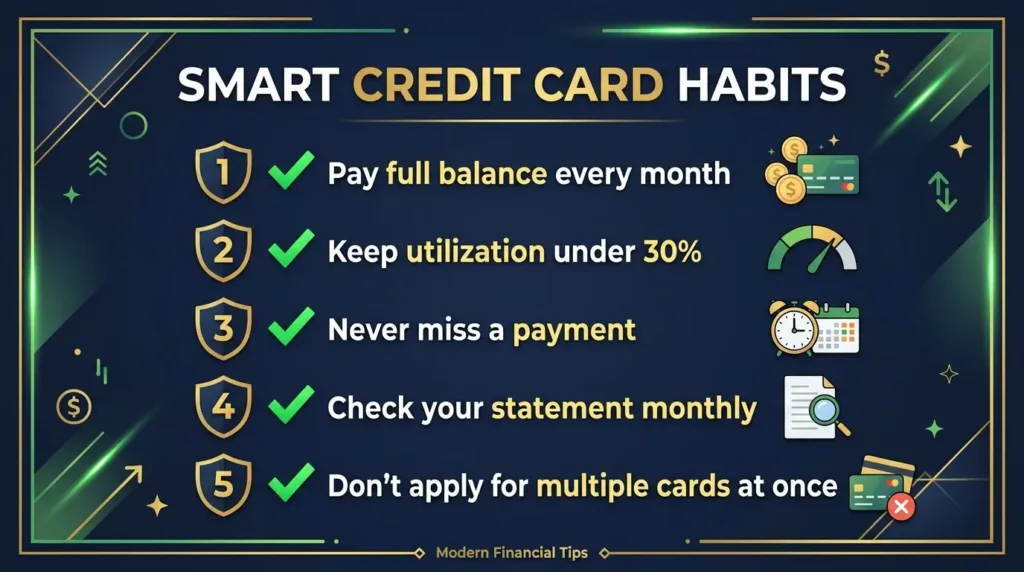
Getting approved is only half the battle. How you use your first credit card determines whether it helps or hurts your financial future. Follow these rules from day one:
Pay Your Full Balance Every Month
This is the single most important rule. Paying your full statement balance every month means you pay zero interest — ever. Credit cards only become expensive when you carry a balance. Set up autopay for the full statement balance to make this automatic.
Keep Your Utilization Below 30%
Credit utilization — the percentage of your limit you’re using — is the second biggest factor in your credit score. If your limit is $500, keep your balance below $150 (30%). Ideally, stay below 10% for the best score impact. High utilization signals financial stress to lenders.
Never Miss a Payment
Payment history is the single largest factor in your credit score — worth 35% of your FICO score. A single missed payment can drop your score by 60–110 points and stays on your report for 7 years. Set up autopay for at least the minimum payment as a safety net.
Review Your Statement Every Month
Check your statement monthly for unauthorized charges, billing errors, or subscriptions you forgot about. Early detection of fraud limits your liability. To understand every line of your credit card statement, read our guide on how to read a credit card statement.
Don’t Apply for More Cards Right Away
Wait at least 6–12 months before applying for a second credit card. Multiple hard inquiries in a short period lower your score and signal risk to lenders. Build a strong history with your first card before expanding.
How Your First Credit Card Builds Your Score
Understanding how your card affects your score helps you use it strategically. Here’s how the five FICO score factors connect to your first credit card:
| FICO Factor | Weight | How Your First Card Affects It |
|---|---|---|
| Payment History | 35% | Every on-time payment adds a positive mark |
| Credit Utilization | 30% | Keep balance below 30% of limit |
| Length of Credit History | 15% | The longer you keep this card open, the better |
| Credit Mix | 10% | A credit card adds diversity to your profile |
| New Credit | 10% | One application = one hard inquiry (temporary dip) |
With consistent on-time payments and low utilization, most first-time cardholders see their score reach 650–700 within 6–12 months — enough to qualify for better cards, auto loans, and apartments.
Common First Credit Card Mistakes to Avoid
- Only paying the minimum — minimum payments keep you in debt for years and cost hundreds in interest
- Maxing out your card — high utilization crushes your credit score fast
- Using it like a debit card — spending more than you can repay in full leads to interest charges and debt. For a clear comparison, read our guide on credit card vs debit card.
- Closing it too soon — closing your oldest card shortens your credit history and hurts your score
- Missing the payment due date — set calendar alerts or autopay to make this impossible
- Applying for multiple cards at once — each application creates a hard inquiry that temporarily lowers your score
Frequently Asked Questions
How do I get my first credit card with no credit history?
The easiest way to get your first credit card with no credit history is to apply for a secured credit card. Secured cards require a refundable deposit ($200–$500) that becomes your credit limit. They are approved even with zero credit history and report to all three major credit bureaus, building your score from day one.
What credit score do I need for my first credit card?
You don’t need any credit score to get your first credit card. Secured credit cards and some student cards are specifically designed for applicants with no credit history at all. If you have a score below 580, a secured card is your best option.
How long does it take to build credit with a first credit card?
You’ll typically see your first credit score appear after 3–6 months of card use. With consistent on-time payments and low utilization, most first-time cardholders reach a 650–700 score within 6–12 months — enough to qualify for better financial products.
Should I get a secured or unsecured first credit card?
If you have zero credit history, start with a secured card — approval is virtually guaranteed. If you’re a college student, a student card is a better option since it requires no deposit. If you have steady income and some credit history, an unsecured beginner card may work.
How many credit cards should a first-timer have?
Start with one card only. Focus on building a strong payment history for at least 6–12 months before considering a second card. Opening multiple cards at once hurts your score with multiple hard inquiries and makes it harder to manage payments responsibly.
Final Thoughts: Your First Card Sets the Foundation
Knowing how to get your first credit card is just the beginning — how you use it is what truly matters. Pay it in full every month, keep your balance low, and never miss a due date. Do those three things consistently for 12 months and you’ll have a credit score that opens financial doors you didn’t have before.
Once your credit is established, the next step is protecting and growing it. Read our full guide on how to build credit from scratch for the complete roadmap — from your first card to an excellent score.