

📢 Disclosure: This post contains affiliate links. We may earn a commission at no extra cost to you. We only recommend products we genuinely believe in.
Understanding the difference between a checking vs savings account is one of the most fundamental personal finance concepts — and knowing which one to use for what purpose can save you money, help you build savings faster, and avoid unnecessary fees. In this guide, we break down exactly how checking vs savings accounts differ, when to use each one, and how to set up both accounts to work together as a complete banking system.
Checking vs Savings Account: The Core Difference
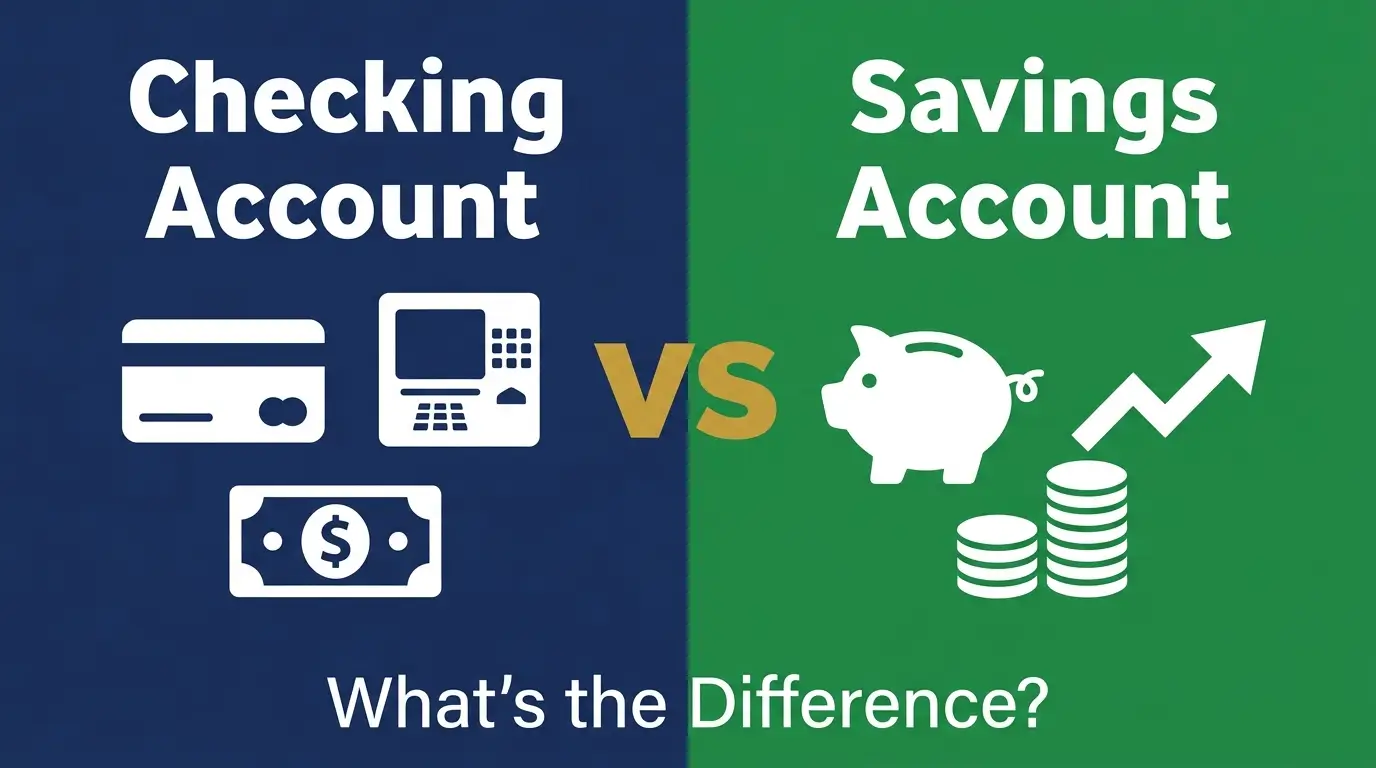
The fundamental difference between a checking and savings account comes down to one thing: purpose.
- A checking account is designed for daily spending — paying bills, making purchases, withdrawing cash, and receiving direct deposits.
- A savings account is designed for storing and growing money — keeping funds separate from spending money and earning interest over time.
Both account types are FDIC-insured up to $250,000 per depositor, meaning your money is protected even if the bank fails. But beyond that basic protection, they work very differently.
What Is a Checking Account?
A checking account is your everyday money hub. It’s where your paycheck lands, where bills get paid, and where you pull cash from the ATM. Checking accounts are built for high-frequency, low-restriction access to your money.
Key Features of a Checking Account
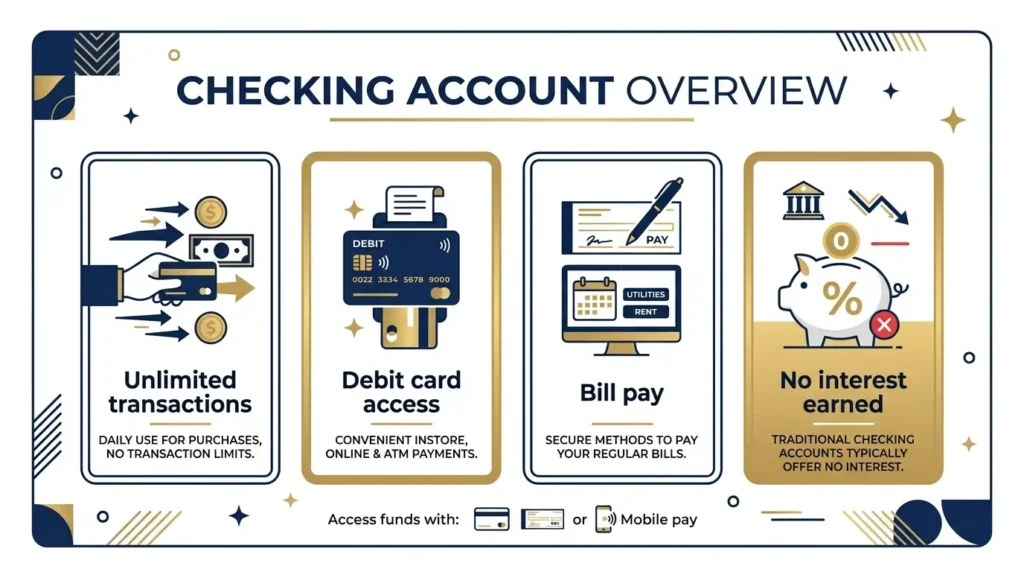
- Unlimited transactions — no limit on how many times you spend, transfer, or withdraw per month
- Debit card access — linked to a debit card for in-store and online purchases
- ATM access — withdraw cash at ATMs nationwide
- Direct deposit — receive your paycheck, government benefits, or freelance payments directly
- Bill pay — set up automatic payments for rent, utilities, subscriptions, and loans
- Mobile check deposit — deposit paper checks via your smartphone camera
- Overdraft protection — some accounts cover you if you spend more than your balance (fees may apply)
What Checking Accounts Don’t Do
Checking accounts typically earn little to no interest — usually 0.01% APY or less. They are not designed to grow your money, only to move it. Keeping large amounts of cash in a checking account means you’re earning nothing on money that could be working for you.
Checking Account Fees to Watch For
- Monthly maintenance fee: $5–$15/month at many traditional banks (often waived with direct deposit or minimum balance)
- Overdraft fee: $25–$35 per occurrence at most banks
- ATM fee: $2–$5 when using out-of-network ATMs
- Paper statement fee: $1–$3/month if you don’t go paperless
Online banks and credit unions typically offer free checking with no monthly fees, no minimum balance, and ATM fee reimbursements. See our guide on how to open a bank account online for a full walkthrough.
What Is a Savings Account?
A savings account is where you keep money you don’t plan to spend right away. It’s designed to hold your emergency fund, short-term savings goals, and any cash you want to protect from the temptation of everyday spending — while earning interest in the meantime.
Key Features of a Savings Account
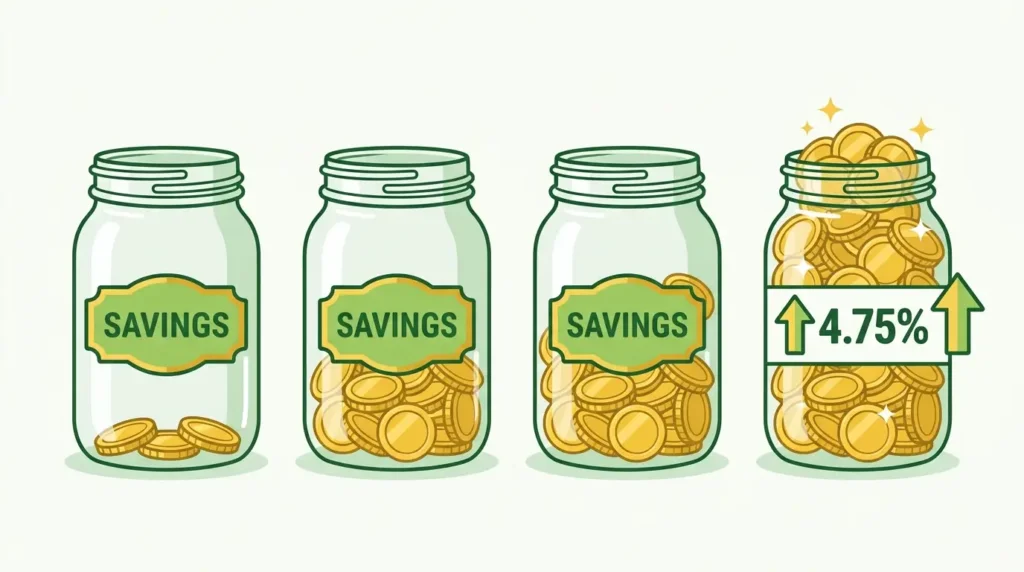
- Interest earnings (APY) — savings accounts pay you interest on your balance, typically 0.01%–5.25% depending on the account type
- FDIC insurance — deposits protected up to $250,000
- Limited transactions — federal regulations previously limited withdrawals to 6/month; many banks still enforce this informally
- Separation from spending — keeping savings in a different account reduces the temptation to spend it
- Easy transfers — link to your checking account for quick electronic transfers (usually 1–3 business days)
Regular vs High-Yield Savings Account
Not all savings accounts are equal. Traditional savings accounts at big banks pay as little as 0.01% APY — virtually nothing. High-yield savings accounts (HYSAs) at online banks pay 4%–5.25% APY in 2026 — the same security and FDIC protection, dramatically more interest.
On a $10,000 balance, the difference is $1 per year vs $500 per year. To understand how APY works and compounds over time, read our guide on what APY means in savings accounts. For the best accounts available today, see our best high-yield savings accounts 2026 guide.
Checking vs Savings Account: Side-by-Side Comparison
| Feature | Checking Account | Savings Account |
|---|---|---|
| Primary purpose | Daily spending & bill pay | Storing & growing money |
| Interest (APY) | 0.01% or none | 0.01%–5.25% |
| Transaction limits | Unlimited | Limited (often 6/month) |
| Debit card | Yes | Usually no |
| ATM access | Yes | Rarely |
| Direct deposit | Yes | No |
| Bill pay | Yes | No |
| FDIC insured | Yes (up to $250K) | Yes (up to $250K) |
| Monthly fees | $0–$15 (often waivable) | Usually $0 |
| Best for | Rent, groceries, daily use | Emergency fund, savings goals |
Do You Need Both a Checking and Savings Account?
Yes — and here’s why. Using both accounts together is one of the most effective personal finance habits you can build. Here’s how they work as a team:
- Checking account = your financial command center. Paycheck lands here. Bills, groceries, subscriptions, and daily purchases come out of here.
- Savings account = your financial vault. Emergency fund lives here. Savings goals grow here. This money is intentionally harder to access so you don’t spend it.
The key habit: on payday, automatically transfer a fixed amount from checking to savings before you spend. This “pay yourself first” system is the foundation of the 50/30/20 budget rule and zero-based budgeting — two proven frameworks for managing money effectively.
How Much Money Should Be in Each Account?
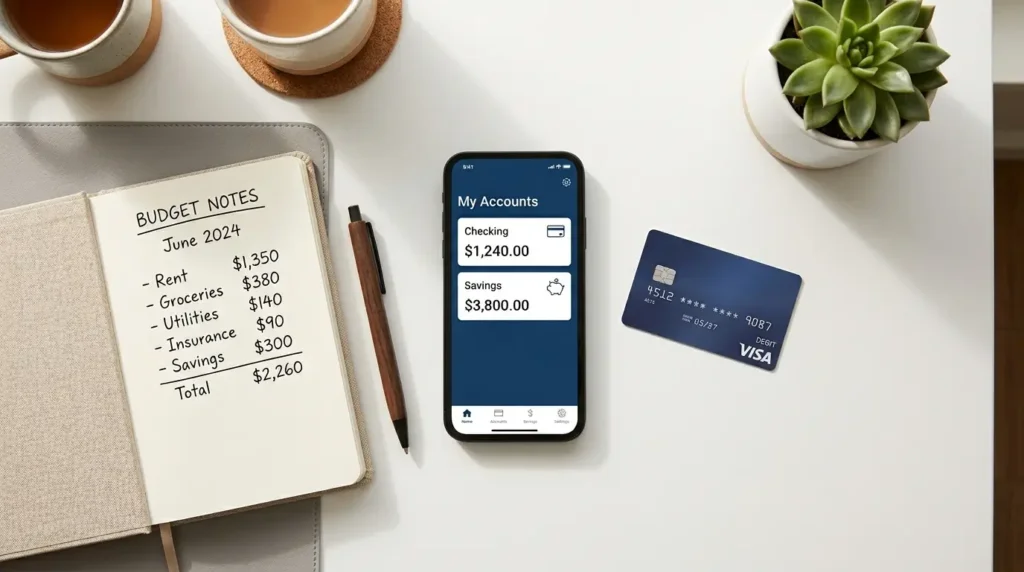
A common question when setting up both accounts is how to split your money. Here’s a practical framework:
| Account | Recommended Balance | Why |
|---|---|---|
| Checking | 1–2 months of expenses | Enough to cover bills without overdrafting, not so much you lose interest |
| Savings (starter) | $1,000 minimum | Starter emergency fund — covers most small financial surprises |
| Savings (goal) | 3–6 months of expenses | Full emergency fund — the gold standard financial safety net |
Keep only what you need in checking. Every extra dollar sitting in a checking account at 0.01% APY is a dollar not earning 4–5% in a high-yield savings account. For a complete plan for building your savings balance, read our guide on how to build an emergency fund.
Checking vs Savings: Which One Should You Open First?
If you’re opening your first bank account, start with a checking account. You need somewhere for your paycheck to land and bills to be paid before you can save anything. Once your checking account is set up and your first paycheck arrives, open a high-yield savings account and set up an automatic transfer.
Most online banks let you open both a checking and savings account at the same institution simultaneously — making transfers between them instant and free. For a step-by-step walkthrough of opening your first account, read our guide on how to open a bank account online.
Common Checking vs Savings Account Mistakes
- Keeping all your money in checking — you earn no interest and it’s easier to overspend when savings aren’t separated
- Using a traditional savings account instead of a HYSA — earning 0.01% vs 4.75% on the same balance is a significant difference over time
- Not automating transfers to savings — manual saving rarely works; automation is the key to consistency
- Overdrawing your checking account — overdraft fees ($25–$35 each) add up fast; keep a small buffer in checking at all times
- Treating your savings as a second spending account — dipping into savings for non-emergencies defeats its purpose entirely
Frequently Asked Questions
What is the main difference between a checking and savings account?
A checking account is designed for daily spending — paying bills, making purchases, and accessing cash. A savings account is designed for storing money and earning interest. Checking accounts offer unlimited transactions and a debit card; savings accounts offer higher interest rates and are meant for money you don’t plan to spend soon.
Can I use a savings account like a checking account?
Not effectively. Savings accounts typically limit withdrawals to 6 per month and don’t come with a debit card or check-writing ability. They’re not designed for daily spending. Using a savings account for everyday transactions can result in fees and limits your flexibility.
Should I have both a checking and savings account?
Yes. Having both is one of the most effective personal finance habits. Your checking account handles daily spending; your savings account holds your emergency fund and savings goals while earning interest. The separation also makes it psychologically harder to spend money you’ve intentionally set aside.
Which earns more interest — checking or savings?
Savings accounts earn significantly more interest. Checking accounts typically earn 0.01% APY or nothing at all. High-yield savings accounts in 2026 offer 4%–5.25% APY. On a $10,000 balance, that’s the difference between earning $1 per year and earning $500 per year.
Are checking and savings accounts FDIC insured?
Yes. Both checking and savings accounts at FDIC-insured banks are protected up to $250,000 per depositor, per institution. This means your money is guaranteed by the federal government even if the bank fails. Always verify a bank is FDIC-insured before opening any account.
Final Thoughts: Use Both, Make Them Work Together
The checking vs savings account debate isn’t really a debate — you need both, and they work best as a team. Your checking account handles the flow of money in and out of your daily life. Your savings account holds and grows the money you’re protecting for the future. Set up both, automate a transfer from checking to savings on every payday, and you’ve built the foundation of a solid financial system.
The next step: make sure your savings account is actually earning meaningful interest. If it’s a traditional savings account earning less than 1%, it’s time to upgrade to a high-yield option. Check our guide on the best high-yield savings accounts 2026 to find the right one for you.