

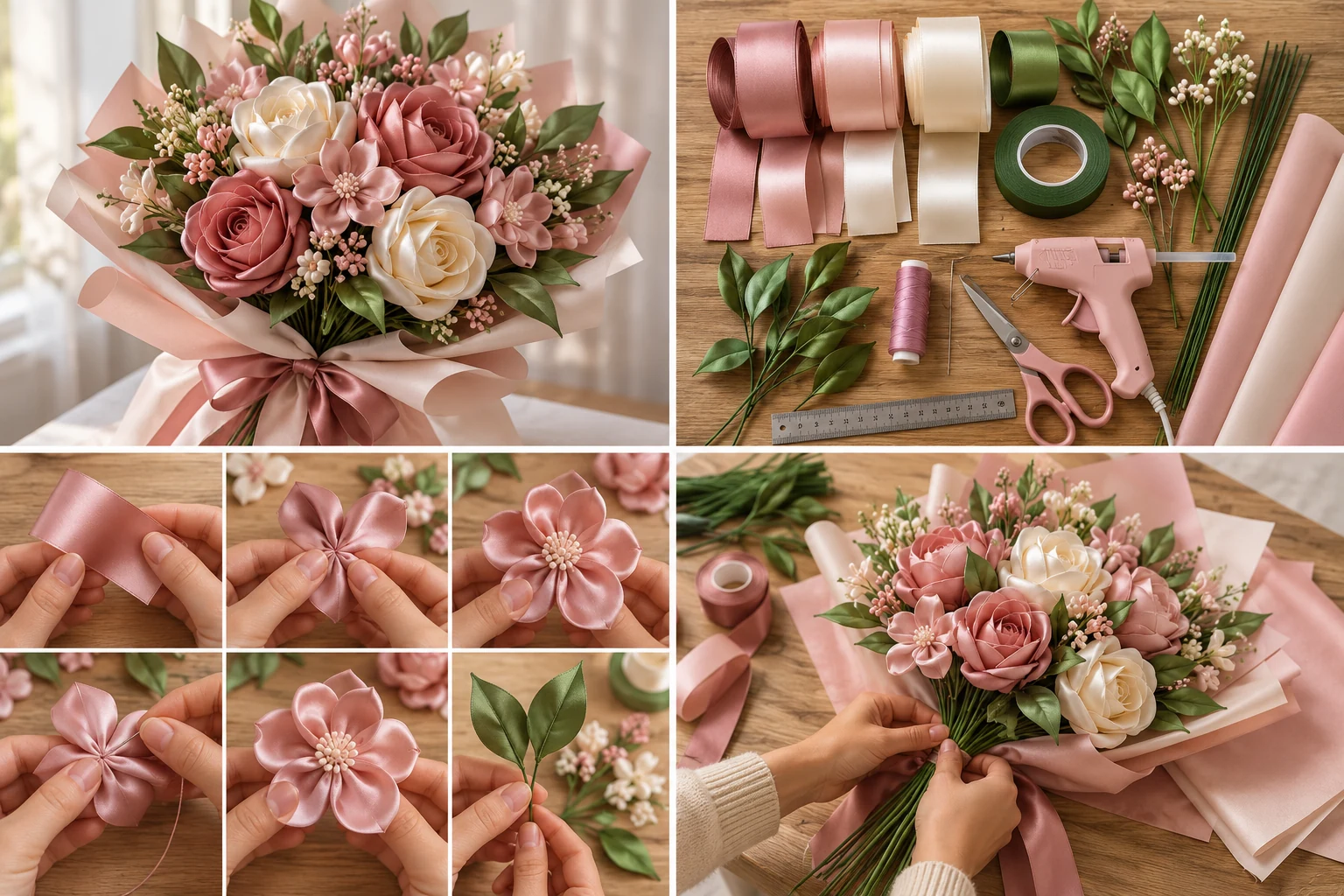
A satin ribbon flower bouquet is a handmade arrangement made from folded or shaped ribbon flowers attached to stems and wrapped like a traditional bouquet. It is a practical project when you want flowers that can be kept as decor or given as a handmade gift instead of fading after a few days.
For beginners, the easiest approach is not to start with ten complicated flower styles. Make one repeatable satin ribbon flower, create it in two or three coordinated colors, attach each bloom to a firm stem, add simple ribbon leaves or artificial greenery, and then arrange the stems into a rounded bouquet. This tutorial walks through that complete process from choosing ribbon to wrapping the finished bouquet.
What Is a Satin Ribbon Flower Bouquet?
A satin ribbon bouquet uses handmade fabric flowers in place of fresh blooms. The petals can be folded, gathered, rolled, stitched, or carefully glued depending on the flower style. Satin is popular because its smooth surface reflects light and gives handmade petals a polished finish.
The bouquet can be small enough for a desk decoration or large enough to become a gift arrangement. It can also be adapted for birthdays, graduation gifts, bridal showers, wedding-inspired decor, anniversaries, or simply as a craft project.
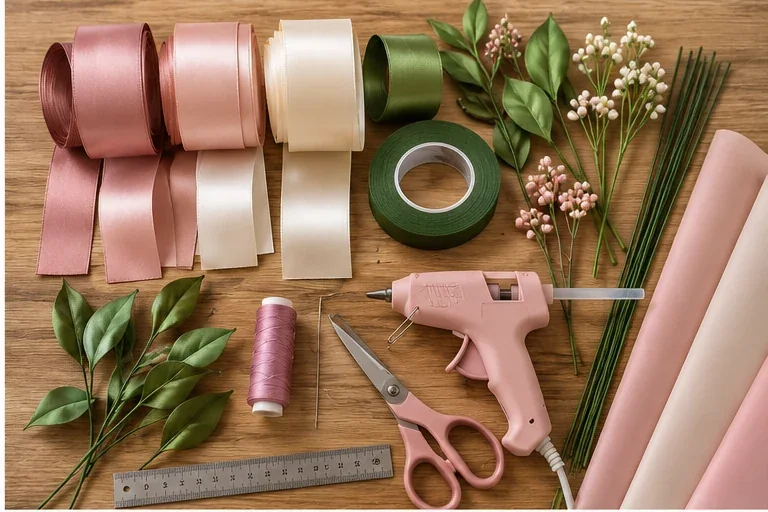
Materials You Need
- Satin ribbon in one to three flower colors
- Green satin ribbon for leaves, optional
- Floral wire, bamboo sticks, or sturdy craft stems
- Green floral tape
- Sharp fabric scissors
- Ruler or measuring tape
- Needle and matching thread if using a sewn method
- Hot glue gun and glue sticks if using a glued method
- Artificial stamens or small beads, optional
- Bouquet wrapping paper, tissue, or cellophane
- Decorative ribbon for the final bow
- Artificial greenery or filler stems, optional
Safety note: hot glue can cause burns. Some ribbon techniques also use heat to seal cut edges. Beginners and children should use a safer no-flame method whenever possible and work with appropriate adult supervision around hot tools.
Choosing the Best Satin Ribbon
Ribbon width changes the scale of the flower. Narrow ribbon produces smaller petals, while wider ribbon creates a larger bloom more quickly. For a first bouquet, use one consistent ribbon type so the flowers have a coordinated texture.
Single-Faced vs Double-Faced Satin
Single-faced satin has one glossy side and one duller side. It can work well, but you need to pay attention to which surface remains visible as you fold the petals. Double-faced satin is shiny on both sides and can be more forgiving for folds that expose both surfaces.
How Many Colors Should You Use?
Two or three flower colors are enough for a cohesive beginner bouquet. For example, combine blush pink, cream, and dusty rose. Another easy palette is lavender, white, and pale purple. Too many unrelated colors can make a small arrangement look visually busy.
Plan the Bouquet Before Making Flowers
Decide approximately how large you want the arrangement to be and where it will be used. A small hand-tied gift bouquet needs fewer flowers than a full centerpiece. Planning first also helps you estimate how much ribbon to prepare.
Choose one dominant color, one supporting color, and an optional accent. Then decide whether all flowers will be the same size or whether you want a few larger focal blooms surrounded by smaller ones.
Step 1: Cut Consistent Ribbon Pieces
Measure the ribbon pieces before cutting so petals made with the same technique remain reasonably consistent. Make a small test flower first rather than cutting the entire roll immediately. If the finished flower is too large or too small, adjust your measurements before preparing the rest.
Keep scraps. Short leftover pieces can later become small buds, centers, leaves, or decorative accents.
Step 2: Make a Simple Folded Satin Petal
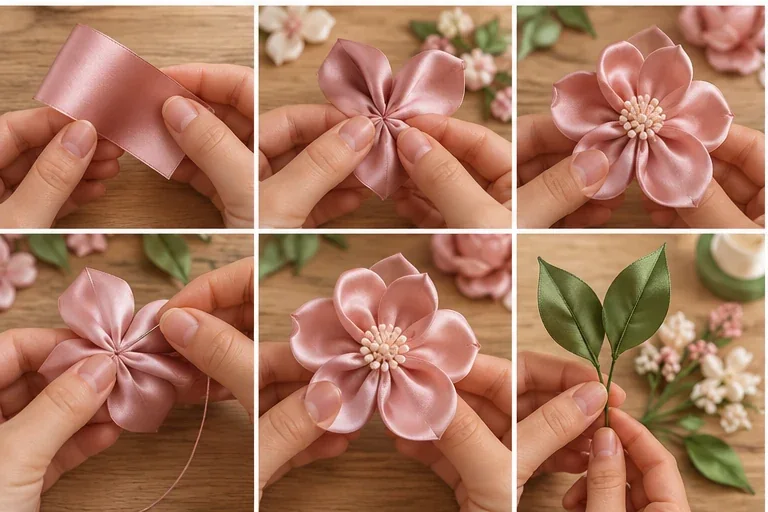
Take one prepared ribbon piece and fold it so the finished edges create the visible upper part of the petal. Bring the lower edges together and secure the base with a small stitch or a minimal amount of glue. Shape the top gently rather than crushing the satin.
Repeat the same basic fold for the remaining petals. Place them next to one another as you work. Small differences are acceptable, but if one petal is dramatically larger, reserve it for another flower instead of forcing it into the same bloom.
Step 3: Assemble the First Ribbon Flower
Arrange several petals in a circle, overlapping their lower edges. Secure the bases together. Add another layer behind the first if you want a fuller bloom. Rotate the flower while assembling it so you can see whether one side has a noticeable gap.
Finish the center with a small rolled ribbon piece, artificial stamens, or a bead if that suits the design. Keep the center proportional to the petals.
Step 4: Make Several Flowers Before Building the Bouquet
Once the first flower looks right, repeat the method in your chosen colors. Working in batches is usually easier: cut several pieces, fold several petals, then assemble several blooms. This also helps keep the flower sizes consistent.
Do not worry if every flower is not perfectly identical. A bouquet often looks more natural when the blooms have small differences in opening and size.
Step 5: Attach Each Flower to a Stem
Attach each finished bloom securely to floral wire, a bamboo stick, or another sturdy craft stem. Cover the connection with green floral tape. The flower should stay facing the intended direction when you hold the stem upright.
Before making the entire bouquet, test one finished stem. If the flower head droops or rotates easily, reinforce the attachment now rather than discovering the problem after wrapping the arrangement.
Step 6: Make Simple Satin Ribbon Leaves
Green ribbon can be folded into simple pointed leaves. Keep the leaf scale appropriate for the flower. Attach leaves individually to stems or group two or three near the lower part of selected blooms.
You do not need leaves on every stem. Leaving some stems simpler prevents the bouquet from becoming too dense.
Step 7: Add Small Buds and Fillers
Use leftover ribbon to make smaller closed shapes that resemble buds. These can fill awkward spaces between larger flowers. Artificial greenery or subtle filler stems can also add height and texture, but they should support the handmade ribbon flowers rather than hide them.
Step 8: Arrange the Bouquet
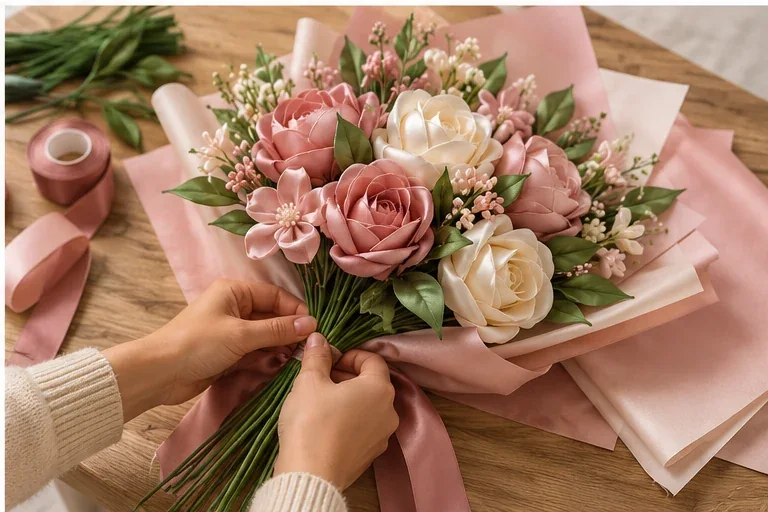
Start with one attractive flower near the center. Add two or three flowers around it at slightly different heights. Rotate the bouquet in your hand as you add stems. Continue filling the outer area while maintaining an overall balanced shape.
A common beginner mistake is arranging the bouquet only from the front. If the finished piece will be viewed from several directions, turn it frequently and check the sides and back too.
The same basic principles apply when arranging other permanent craft flowers. Our realistic pipe cleaner flower bouquet tutorial explains how varying bloom sizes, heights, fillers, and greenery can create a more balanced handmade arrangement.
Step 9: Secure the Stems
When you are satisfied with the arrangement, secure the gathered stems firmly below the flower heads. Check the bouquet one final time before tightening everything completely. This is the easiest moment to reposition a bloom that sits too high or too far to one side.
Step 10: Wrap the Satin Ribbon Flower Bouquet
Place the bouquet diagonally on wrapping paper or tissue so the flower heads remain visible above the upper edge. Fold the paper around the stems without compressing the flowers. Add a second layer if you want more volume, then secure the wrapping around the handle area.
Finish with a decorative ribbon bow. A wrapping color that contrasts gently with the flowers usually works better than one that competes with them. Kraft paper creates a casual handmade look, while white, cream, or translucent wrapping can feel more formal.
How to Make Ribbon Flowers Look More Realistic
- Use more than one petal size when making larger flowers.
- Curve individual petals instead of leaving every layer flat.
- Vary flower height slightly within the bouquet.
- Use related shades rather than a completely random color mix.
- Add a few buds to show different stages of opening.
- Hide glue, stitches, and stem connections underneath the flower.
- Use greenery to soften the spaces between blooms.
- Reshape the flowers after the bouquet is tied.
Easy Satin Ribbon Bouquet Color Ideas
Blush Pink and Cream
Blush, cream, and dusty rose create a soft romantic palette suitable for gifts and wedding-inspired decor.
Lavender and White
Lavender, pale purple, and white work well with cool green foliage and create a calm spring look.
Peach and Coral
Peach, cream, and soft coral make a warmer arrangement that can feel cheerful without becoming too bright.
Red and Ivory
Deep red flowers combined with ivory accents create strong contrast. Use the darker shade as the focal color rather than distributing both colors mechanically.
How Many Ribbon Flowers Do You Need?
There is no universal number because flower diameter, stem spacing, fillers, and bouquet size all change the result. Instead of following an arbitrary count, make a first group of blooms and hold them together. Add flowers until the arrangement reaches the width and fullness you want.
For a fuller look without making dozens of large flowers, combine medium blooms with smaller buds and greenery. This creates visual volume while preserving spaces between focal flowers.
Satin Ribbon Flowers vs Pipe Cleaner Flowers
Both crafts can create permanent handmade bouquets, but they produce different textures. Satin ribbon has a smooth fabric sheen and works particularly well for folded or layered petals. Chenille stems are fuzzy, flexible, and can be shaped without sewing.
If you prefer sculpting individual petals and stems by bending material, explore our pipe cleaner peony tutorial or pipe cleaner ranunculus tutorial. If you enjoy fabric folding and a smoother finish, satin ribbon offers a noticeably different craft experience.
Common Mistakes to Avoid
Using Too Much Glue
Large visible glue spots can stiffen satin and make petals look bulky. Use only what is necessary to secure the construction, and keep adhesive near hidden bases whenever possible.
Making Every Flower Exactly the Same Height
A bouquet can look flat when all blooms form one rigid horizontal line. Adjust stem heights slightly to create depth.
Adding Too Many Colors
More colors do not automatically create a richer bouquet. A controlled palette often looks more intentional and makes it easier to choose wrapping paper and greenery.
Ignoring the Back of the Bouquet
Rotate the arrangement while assembling it. Even a bouquet intended for photographs from the front benefits from clean sides and securely covered stems.
Ways to Use a Handmade Ribbon Flower Bouquet
A finished bouquet can be displayed in a vase, wrapped as a handmade gift, used as party decor, incorporated into a craft-room display, or adapted for wedding-inspired decorations. Smaller ribbon flowers can also be used separately on gift boxes, hair accessories, wreaths, or other fabric craft projects.
If you want to mix materials, keep one material dominant. For example, use satin ribbon as the main flower type and add only a few chenille accents rather than combining equal amounts of several unrelated craft textures.
How to Store Satin Ribbon Flowers
Keep the bouquet away from moisture, strong heat, and prolonged direct sunlight. Dust can be removed gently with a soft brush or low-pressure air. Avoid crushing the bouquet inside a small container because folded satin petals can develop unwanted creases.
If you need to store the arrangement temporarily, use a box large enough that the flower heads do not press against the lid. Support the stems so the bouquet does not slide around inside.
FAQS
Are satin ribbon flowers easy for beginners?
Yes, if you begin with one simple petal technique and repeat it. More elaborate roses and multi-layer flowers can be learned after you are comfortable measuring, folding, and securing basic petals.
What ribbon is best for making flowers?
Satin ribbon is popular because it is smooth, flexible, and available in many widths and colors. The best width depends on the size and style of flower you want to make.
Can you make ribbon flowers without sewing?
Yes. Some ribbon flower methods use folds and adhesive instead of stitches. Other techniques use simple hand sewing to gather petals. Choose the construction method that matches your tools and skill level.
How do you keep ribbon flowers on their stems?
Secure the flower base firmly to a sturdy stem and cover the connection with floral tape. Test each flower before adding it to the bouquet so loose attachments can be reinforced early.
Can a satin ribbon bouquet be used as a gift?
Yes. A handmade ribbon bouquet can be wrapped like a floral gift and adapted to the recipient’s preferred colors. It can also be displayed afterward as decorative craft work.
Final Tips for a Polished Ribbon Bouquet
Start with one flower style, make a test bloom, and only then prepare the rest of your materials. Keep the palette controlled, use sturdy stems, rotate the bouquet while arranging it, and leave enough space for individual flowers to remain visible. The final shaping and wrapping are just as important as the petal construction.
Once you are comfortable with this basic satin ribbon flower bouquet, you can build a complete ribbon-flower cluster around more specific techniques such as ribbon roses, lilies, small filler flowers, bridal-style bouquets, and individual gift arrangements.